Letting a property in Chile while living abroad
Having the property let from abroad works well until the tenant stops paying. What decides that moment is three decisions taken when the contract is signed.
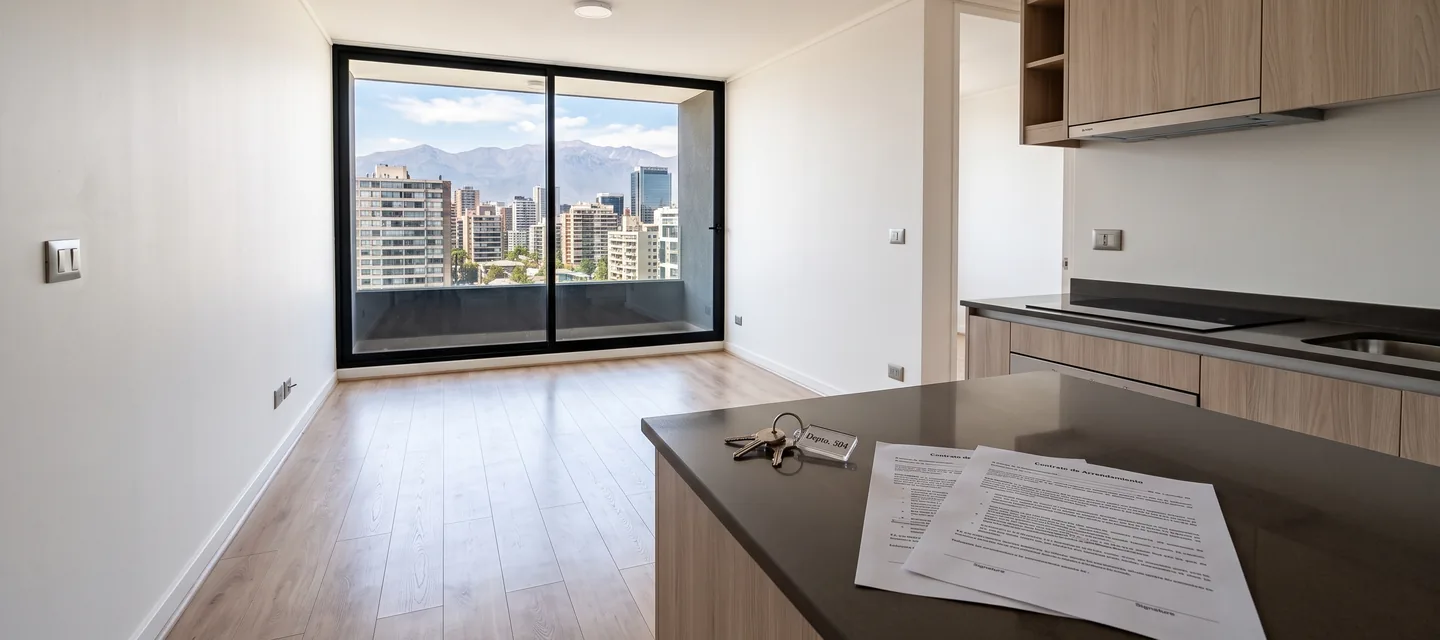
You can let, collect and, if it comes to that, evict without travelling. But almost everything is decided when the contract is signed, not when the problem appears. Three decisions change the outcome: that the utilities are in the name of the tenant, that there is a guarantor or joint debtor, and that the contract is in writing with enough detail. With those in place, collecting unpaid rent is a monitorio procedure (an order for payment procedure) that averages 104 days to the eviction order according to the Judiciary itself. Without them, the same case can take years.
The three decisions taken at signing
The utilities in the name of the tenant, from the first day. It looks administrative and it is not: it is what separates his debt from yours. If the accounts stay in your name, the utility company bills you, and when it cuts off the service for arrears the one who appears to be harming the occupant is the owner.
A guarantor or joint debtor, properly identified. That is what makes a judgment collectable. Adding one later is not possible: the demand for payment is directed at whoever was sued, so if the guarantor was not in the claim you have to start again.
The contract in writing and with enough detail. A verbal tenancy is valid, but the fast collection procedure rests on documentary evidence, so without a written contract you lose precisely the tool that makes managing at a distance workable.
When he does not pay: the monitorio
Law 21,461, known as the Devuélveme mi casa law (Give Me Back My House), created a monitorio procedure for collecting unpaid rent, common expenses and utility charges. Once the tenant has been served, ten consecutive days run for him to pay or to object, and if he does nothing he is ordered to pay and the eviction is ordered within a period not exceeding ten days from the moment the ruling becomes final.
The figures from the Judiciary itself help to calibrate: between July 2022 and December 2023, 21,162 urban tenancy cases were filed, 68.6 percent of them by this route, with an average of 104 days between filing and eviction. That average is dominated by the cases nobody answers. If the tenant objects and the objection is held to be well founded, the monitorio comes to an end and the matter has to go to a declaratory trial.
Which is why the quality of the claim is everything. A badly itemised debt or a badly identified contract are the way in for an objection. The full detail is in the guide to the Devuélveme mi casa law.
When the contract has expired and there is no debt
It is a different situation and many people confuse the two. If the tenant is up to date and what you want is to recover the property, the route is not the monitorio but the notice of termination, with considerably longer periods: four months from service, plus two months for each complete year of tenancy, with a cap of twelve.
That is to say, a tenant with six years in the property can have twelve months to leave. For somebody managing from abroad that means planning a long way ahead, above all if the property is going to be sold. The map of the routes for each case is in the guide on how to evict a tenant.
What cannot be done, however great the distance
Cutting off the water, the electricity or the gas to put pressure on a tenant in arrears is self help, and the Chilean courts treat it as an illegal and arbitrary act that is reversed by a constitutional protection action within days. It also breaches the obligation of the landlord not to disturb the enjoyment of the property, which gives the tenant a claim to ask for termination with damages.
For the owner who lives abroad the temptation is greater, because the distance makes it feel as though there is no other tool. The result is the opposite of the one sought: you enter the trial with a ruling against you and a damages claim waiting. The reasons are in the guide on cutting off the utilities.
If the property is occupied and there never was a contract
That is another situation and another route. If somebody occupies the property without a contract ever having existed, what applies is the precario action (unauthorized occupation without any contract), which since 2022 is heard under the same monitorio procedure of the tenancy law. And if entry was by force, the route is criminal and has an eviction precautionary measure that operates far sooner than any civil trial.
The rule that avoids the mistake is simple: if there ever was a contract, even a verbal one, the route is the civil tenancy one. If there never was one but you tolerated the occupation, it is precario. If it was by force, it is usurpation.
Who manages in the meantime
Somebody has to receive the rent, check the state of the property, pay the contribuciones and answer when something breaks. It can be an agent, a relative or us, and what matters is that the engagement is in writing with periodic accounting, because informal arrangements between relatives are a frequent source of conflict when the property is sold or inherited.
The power of attorney granted for this is different from the power of attorney to sell: administering falls within the ordinary mandate, selling does not. That is explained in the guide to the power of attorney.
Frequently asked questions
Can I sue my tenant without travelling to Chile?
How long does recovering the property really take?
The tenant stopped paying and the accounts are in my name. What do I do?
Can I raise the rent from abroad?
My tenant left and the house was wrecked. What can I do?
Is it better to let the property or leave it closed up?
Can I ask a relative to manage it without a contract?
Further reading
Other areas from abroad
Tell us about your case
With whatever background you have to hand, we can tell you where the matter stands and which procedure applies. The first conversation is free and commits you to nothing.
Message us on WhatsApp