Land title regularization
Experts in processing property regularization
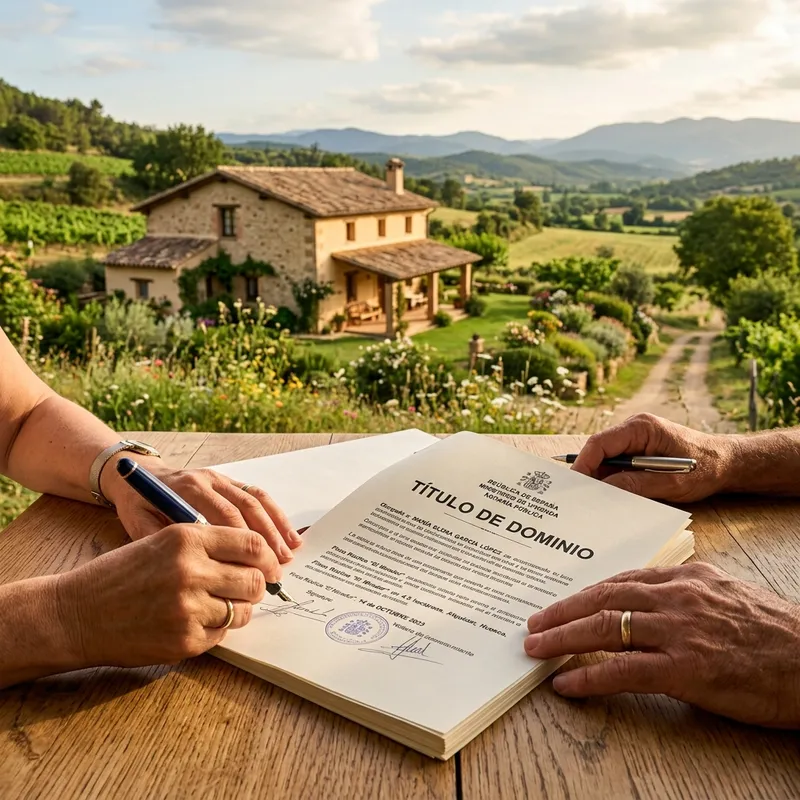
Land regularization under Decree Law 2,695 allows someone who occupies land as its owner, without a title registered in their name, to obtain that title from the Ministry of National Assets. It requires material, peaceful and uninterrupted possession for at least five years, a fiscal appraisal equal to or below 1,000 UTM, and no pending lawsuit over the property. The procedure takes between eighteen months and two years, and ends with a resolution recorded at the Real Estate Registrar.
Thousands of Chileans live in properties without having their title deed. We process individual regularization through Decree Law 2.695 before National Assets, allowing you to obtain legal certainty and definitive ownership of your home.
Additionally, we are experts in the application of the "irregular subdivisions law" (Law 20.234), which allows us to regularize and clear the titles of entire communities, granting them access to basic services and legal urbanization.
Who can regularize land under DL 2,695
The benefit is reserved for small landholdings and for whoever occupies them as owner. That distinction is what defeats most applications: tenants, borrowers and caretakers are mere holders, because they acknowledge that ownership lies with someone else, and the law does not allow them to register the property in their own name however many years they have been there.
The Ministry of National Assets checks four requirements. Material possession of the land for five years or more, provable through concrete facts: fences, crops, buildings, property tax payments or utility bills in your name. That this possession has been peaceful, with no pending ownership disputes or eviction proceedings. A fiscal appraisal no higher than 1,000 UTM, a cap that since April 2025 is the same for urban and rural land, replacing the 380 and 800 UTM limits that applied before. And that you do not already hold a registered title over that property.
Indigenous land, governed by Law 19,253, and State-owned property fall outside this route and follow procedures of their own. If yours is one of those, it does not mean there is no solution, only that the solution is a different one. You can check in one minute whether you qualify with our DL 2,695 test.
What you have to prove to the Ministry
The file is won or lost on the evidence of possession. Stating that you have been on the land for twenty years is not enough: it has to be documented. The records that work best are those carrying a firm date and your own name, such as electricity and water bills, property tax receipts, receipts for building materials, and sworn statements from neighbouring owners who can describe since when they have seen you occupying the plot.
Then there is the survey plan. The Ministry requires a topographic survey establishing the actual area and boundaries, prepared by a qualified professional. A deficient plan, with boundaries that do not match what is on the ground or areas that contradict neighbouring titles, is the second most common ground for rejection after mere holding. Our surveying department prepares that survey as part of the engagement.
How long it takes and what it costs
Regularization is a long State procedure: between 18 and 24 months from filing to registration. Be wary of anyone promising you a title deed in six months, because the timeline does not depend on the firm you hire but on the Ministry's own pace. What does depend on the team is that the file goes in complete and does not collapse over avoidable observations, which is where the months are really lost.
Our fee for regularization is $1,200,000 per property, and it falls when several are processed together: $1,000,000 for two to four plots, $800,000 for five to seven, $650,000 for eight to ten, and $500,000 above eleven. That is why communities and groups of neighbours are better off applying jointly. You can combine this procedure with the others in our cost calculator.
What happens once you obtain the title
The Ministry's resolution is recorded at the Real Estate Registrar and from that moment you are the regular possessor of the property. With the registered title you can apply for State housing subsidies, contract utilities in your name, mortgage, sell with bank financing and pass the property on without leaving your family an estate impossible to untangle.
One restriction is worth knowing from the outset: the law prohibits transferring the property during the first year counted from registration, and keeps certain grounds for third party challenge open for five years. It is no obstacle to building or to applying for subsidies, but it does matter for anyone regularizing with the sole purpose of selling immediately.
When DL 2,695 is not the right route
A good share of the cases that reach our firm do not need regularization but something else. If the land comes from an untransferred inheritance, what applies first is probate and the special inheritance registration. If the problem is that the deed states an area different from the real one, the answer is a rectification of area and boundaries. And if you bought shares and rights, the route runs through winding up that co-ownership.
Filing for regularization when another procedure applied means losing the money spent on the file and, at best, a year. That is why we always start with a title study that determines which procedure applies before you spend on survey plans.
- Obtaining a domain title in your name
- Increase in the commercial value of your property
- Access to state housing subsidies