Water rights
Water use rights that are registered, regularized and ready to be used, inherited or sold
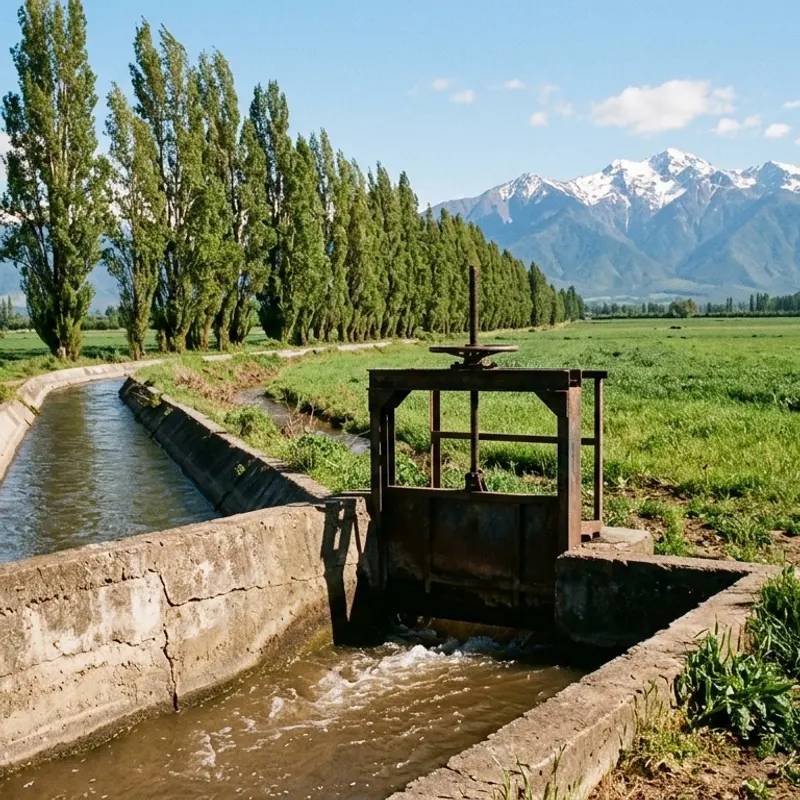
A water use right is a property right separate from the land: it arises from a grant by the General Directorate of Water (DGA) or directly by law, and possession of it is acquired by registering it in the Water Rights Registry of the Real Estate Registrar. It must also be recorded in the DGA's Public Water Registry. Law 21.841, published on October 9, 2026, set April 6, 2032 as the deadline to register with the Registrar any granted rights that are still unregistered and to file for regularization of long-standing uses. After that date, rights that remain unregistered lapse automatically by operation of law.
In Chile, the water on a property does not come with the land. The Water Code treats a water use right (derecho de aprovechamiento) as an asset separate from the land: it is transferred by public deed, it is acquired by registering it in the Water Rights Registry of the Real Estate Registrar (Conservador de Bienes Raíces), and if the deed for the sale of a property does not expressly say the rights are included, the law presumes they are not. That is why so many properties have a well, a canal intake or shares in a water users' association whose right was never registered, or is still in the name of a former owner or of someone who has died.
We handle the right from start to finish: we review its titles at the Registrar and in the Public Water Registry (Catastro Público de Aguas), we register or regularize it, we record it with the General Directorate of Water (DGA) and we leave it ready to be used, inherited or sold. The registration must state the point of extraction in UTM coordinates, and that measurement and the plans are done by our own team of surveyors.
What this area covers
- Title studies of water rights
- Registration with the Real Estate Registrar and the Public Water Registry
- Regularization of wells and long-standing uses without title
- Water rights in inheritances
- Sale and transfer of water rights
- Measurement of the point of extraction in UTM coordinates
Water does not come with the land
The rule is in Article 317 of the Water Code: when a property is sold, the deed must state expressly whether the water use rights are also transferred, and if it does not, they are presumed not to be included. The right has a life of its own. It is transferred by public deed, it is acquired by registering it in the Registrar's Water Rights Registry, and it can even be mortgaged separately from the property.
In practice, this leads to three common situations. The seller had the right registered, but the deed did not mention it and the water stayed in the seller's name. The right exists in a DGA resolution, but it was never registered. Or the property has a well or a canal intake that has been used for decades without any title. Each one has a different solution, which is why the assessment starts with the registries and not with the listing. We explain it step by step in our guide to buying land with water rights.
The Law 21.841 deadline: April 6, 2032
The 2022 reform of the Water Code, Law 21.435, required that rights granted by an authority and not yet registered at that time be registered with the Registrar. The deadline has been extended three times. The latest extension is Law 21.841, published on October 9, 2026, which moved it to April 6, 2032. For small agricultural producers as defined in Law 18.910, the period is eleven years and ends in April 2033.
The consequence of not registering is written into the law: once the deadline passes, the Registrar will not accept the registration and the right lapses automatically by operation of law, with no need for a resolution declaring it. Rural water services, agricultural communities, indigenous persons and communities, and owners of protected areas who do not use their rights in order to preserve the ecosystem are exempt from that lapse. Uses whose regularization was filed before the deadline do not lapse either.
April 6, 2032 is also the deadline to prove to the DGA the registration of rights that appear at the Registrar but not in the Public Water Registry. That omission does not make the right lapse, but it carries a fine of 51 to 100 UTM (Chilean monthly tax units), unless the Registrar itself reported the registration to the DGA, and as long as the right is not in the Public Water Registry, no procedure concerning it can be carried out before the DGA. From that date on, the Registrar will also refuse to record the sale of a right that does not have the Public Water Registry receipt annotated in its margin.
Wells and long-standing uses without title
Many properties have used water for decades without any granted right. For those cases, the second transitory article of the Water Code allows the use to be regularized and a right obtained in the name of the person exercising it. The requirements are strict: the water must have been in use when the Code came into force in 1981, with at least five years of uninterrupted use, without concealment or force and without acknowledging anyone else's ownership. The DGA reads this as use proven since at least October 29, 1976.
Since the 2022 reform, regularization is processed before the DGA, with public notices, a period for third parties to object and consultation with the water users' organization, and it ends in a resolution that can be challenged before the Court of Appeals. Applications are only accepted until April 6, 2032, except those filed by indigenous persons and communities. For members of a canal association who do not have an individual title, Law 21.841 added a collective route: the registered users' organization can ask the DGA to regularize all of them, with the approval of two thirds of the votes cast at a special meeting and provided they are up to date on their dues.
Not every well needs a right. Article 56 of the Code allows a well to be dug on one's own land for drinking and domestic subsistence uses, which the law defines as drinking water, personal hygiene, water for the family's animals and the vegetable garden needed for subsistence. The DGA has set flow and volume limits for that exception and does not accept it for commercial irrigation, rental cabins or where a connection to the public water supply is feasible. We go into detail in our guide on wells without water rights and DGA fines.
Water rights in an inheritance
When the holder dies, the right passes to the heirs, but it does not end up in their name on its own. Article 114 of the Water Code requires that the same acts the Civil Code demands for an inherited property be recorded in the Water Rights Registry: the probate order (posesión efectiva), the special inheritance registration and, where applicable, the allocation made in the partition. Until that is done, the heirs cannot sell the right or record it in their name in the Public Water Registry.
One detail is often overlooked: the competent Registrar is the one for the district where the canal intake on the natural watercourse is located, or where the well is, and it is not always the same Registrar as for the land. After registration, the change of holder is reported to the Public Water Registry. And if the deceased's right was never registered, the inheritance is also subject to the 2032 deadline. We coordinate it with the probate process so it is resolved in a single procedure.
Buying, selling or moving a right
Before you buy a right, or a property with water, we review its registration with a certificate of good standing and of liens at the Registrar, its record in the Public Water Registry and whether it appears in the annual lists of non-use fees published by the DGA. A right that is not used pays that fee every year and, once the periods set by law have passed, it can be extinguished in whole or in part.
Moving the exercise of a surface water right or changing the point of extraction of a well requires authorization from the DGA, which must grant it if water is available at the new point and third parties are not affected. To apply, the right must have its final certificate from the Public Water Registry. In those procedures, the exact location of the new point and the plans are prepared by our technical team, with no middlemen.
- Review of the right at the Registrar and in the Public Water Registry before you buy, sell or inherit
- Point of extraction measured and plans drawn up by our surveyors
- Registration or regularization within the deadline set by Law 21.841