History of the ley Sabag (law 19.807): origin and legal procedure
- Origin and enactment: the birth of law 19.807
- The legal exceptions introduced to d.l. 3516
- ↳ Timeline: from the 1980 restriction to the 2002 exception
- The social and property significance of the law
- Technical and legal procedure: how to process a subdivision under the ley Sabag
- ↳ Phase 1: topographic survey and site plan
- ↳ Phase 2: preparing and reviewing the file
- ↳ Phase 3: assigning roll numbers (SII)
- ↳ Phase 4: legal completion
- Frequently asked questions about the ley Sabag
- ↳ Who can the lot be transferred to under the ley Sabag?
- ↳ How big can the lot being transferred be?
- ↳ Can that lot be sold to a third party?
- ↳ Did the ley Sabag repeal decree law 3.516?
- ↳ Who was Hosain Sabag?
- ↳ Is the ley Sabag only for giving a plot to a child, or can it also be used to donate land to a neighbourhood association?
- ↳ Is this the only exception for subdividing under 5,000 square metres?
- Trust your family's history to real experts
- ↳ Want to know if you meet the requirements?
Law 19.807, known as the ley Sabag, was enacted in 2002 to solve a specific social problem. Decree law 3.516 of 1980 prohibits subdividing rural properties into lots smaller than 5,000 square metres, and that rule left farming families with no legal way to give a child a plot within the same farm. The ley Sabag opened a narrow exception to that restriction, without repealing the general rule.
This article covers one specific aspect of the ley Sabag. If you are looking for the full picture, see our complete guide to the ley Sabag, with requirements, the step by step process and costs.
Chile's real estate regulatory framework is marked by its firm defence of arable land, aiming to prevent the fragmentation of rural properties and the spread of unregulated subdivisions. However, the strict rule in decree law 3.516 created serious social problems until the enactment of law 19.807, popularly known as the "ley Sabag".
Origin and enactment: the birth of law 19.807
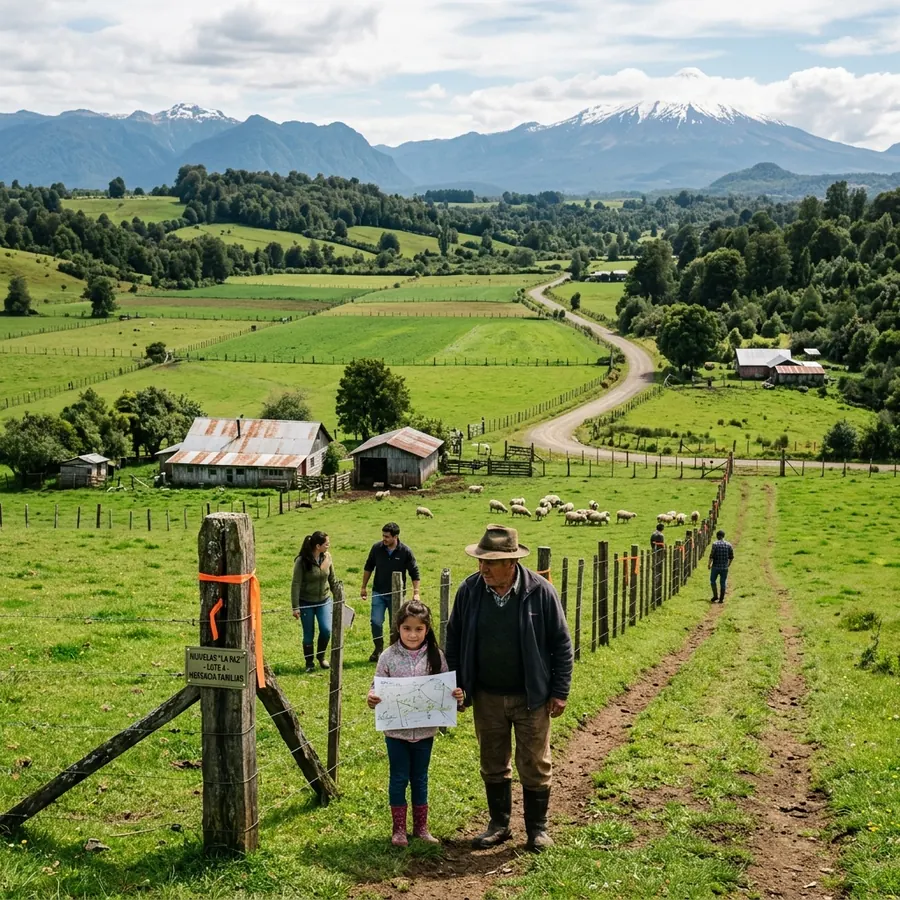
Before 2002, farming families in Chile faced an insurmountable legal dilemma. D.l. 3.516 of 1980 categorically established that rural properties could not be subdivided into lots smaller than 5,000 square metres (half a hectare). This restriction, though intended to protect agricultural productivity, clashed head on with a dramatic social reality: small rural landowners had no legal way to give their children a plot of land to build their own homes.
Against this backdrop of rural displacement, senator Hosain Sabag sponsored a bill aimed at making rural legislation more humane. After intense parliamentary debate over the balance between protecting agricultural land and guaranteeing the right to housing, law 19.807 was enacted and published in the Official Gazette in 2002. This historic milestone marked a shift in Chilean agricultural law.
The legal exceptions introduced to d.l. 3516
Specifically, law 19.807 introduced exhaustive and strictly limited exceptions to article 1 of d.l. 3.516. With this, it allowed, for the first time, in a legal and regulated way, breaching the previously unbreakable 5,000 square metre limit, by setting out two main routes of exception:
- Family transfer: Subdivision and subsequent transfer of lots to the owner's ascendants and descendants was authorised, covering both blood relatives and relatives by marriage. The sole purpose of this transfer must be to build housing for those family members, and the legislator limited the resulting lot to a strict range: it cannot be smaller than 500 square metres nor larger than 1,000 square metres.
- Institutional and community transfer: The second exception allows a free transfer to public law entities or to non profit private law foundations and corporations. The purpose here is to build infrastructure of clear community benefit, such as schools, chapels, rural health posts, community centres, neighbourhood associations and sports facilities.
Knowing this origin explains why the exception is so narrow. Law 19.807 did not open a general route for subdividing farmland: it solved the specific case of family housing and community infrastructure, leaving the general prohibition in decree law 3.516 intact for any other purpose.
Timeline: from the 1980 restriction to the 2002 exception
Set out in order, the history of the rule looks like this:
The social and property significance of the law
Today, looking at the ley Sabag makes clear it stands as an undisputed pillar of modern Chilean agricultural and property law. Its impact goes beyond simply adjusting square metres: it stands as an active tool that directly fights rural poverty and slows the depopulation of the Chilean countryside.
One of its greatest achievements in property terms is that it encourages regularisation. By offering an accessible legal route, it stops families falling into dangerous and precarious informal "transfers of rights". Giving a piece of land under this law means providing the family member with their own exclusive, independent property tax roll number, giving them full legal certainty over their portion of the land.
This independent roll number is also the master key to social development: it allows access to state housing subsidies (such as those provided by the MINVU, Chile's housing ministry) and to the formal installation of basic services. At the same time, the law was drafted with clever legal safeguards to protect agricultural land: it imposes a legal restriction preventing the subdivided plot from being sold (alienated) to third parties outside the family for a period of 5 years. This safeguard is crucial, since it stops the law being used in bad faith to justify illegal subdivisions or disguised property developments.
Does this match your situation?
Ask about my case on WhatsAppTechnical and legal procedure: how to process a subdivision under the ley Sabag
Despite its good intentions, taking advantage of this law is not a simple over the counter procedure. It is a highly complex procedural, technical and legal process that requires coordinated specialists. Below, we set out the rigorous step by step process:
Phase 1: topographic survey and site plan
The process starts on the ground. It requires preparing highly accurate topographic plans, with georeferencing of the parent property and the lot being separated, making sure the area stays within the legally permitted range of 500 to 1,000 square metres and that the boundaries and access are correctly defined, a point handled with the same logic we describe in our guide to correcting registered area and boundaries. That plan is the one later filed at the Conservador de Bienes Raíces (the Chilean property registry) along with the deed.
Phase 2: preparing and reviewing the file
It is worth pausing here, because a mistaken idea is widely repeated. This route does not require certification from the Agriculture and Livestock Service (SAG) or review by an authorised third party. The SAG's own Exempt Resolution No. 4788 of 2024, in its section V, expressly excluded letter j) of article 1 of DL 3.516 from the certification required under article 46 of Law 18.755, in compliance with ruling No. E258993 of 2022 of the Contraloría General de la República, the Chilean comptroller general. Those requirements apply to subdivisions of half a hectare or more, which is a different procedure: the general subdivision of agricultural land, where the SAG does get involved and where most of the rejections we review in this other guide take place.
What you do have to put together is the file that supports the deed: certificates from the Registro Civil, Chile's civil registry, proving the first degree blood or marriage relationship, the tax appraisal certificate for the parent property, which must be under 1,000 UF, and the title study for the parent property. Nobody is going to review that file before signing, which is precisely why it has to be put together properly.
Phase 3: assigning roll numbers (SII)
Once the public deed of transfer is signed, the process moves into the tax sphere. An independent property tax roll number is requested for the newly created lot from the Servicio de Impuestos Internos (the Chilean tax authority), known as the SII, so that the new property stops carrying the original land's roll number. With that settled, the deed and the plan are taken to the Conservador, which registers title and records ex officio the five year ban on transfer.
Phase 4: legal completion
The final stage consolidates ownership. The lawyers draft the technical wording of the public deed (whether as a sale, an assignment or a gift). In the case of a gift, the complex court process known as "insinuación", judicial authorisation for the gift, must first be completed before the civil courts. Finally, the deed is registered with the relevant Conservador (CBR), expressly recording the legal ban on transfer to third parties for the period of 5 years.
The full detail of this process, agency by agency and with the documents each one asks for, is in our guide on where the ley Sabag is processed. And the most common mistakes that make the file fail, precisely because nobody reviews it before signing, are gathered in why the ley Sabag family subdivision gets rejected.
Frequently asked questions about the ley Sabag
Who can the lot be transferred to under the ley Sabag?
Only to a first degree relative. Law 19.807 allows the lot to be transferred to a father, mother, son or daughter, and by marriage to a father in law, mother in law, son in law or daughter in law, always so that person can build their home there. Outside that circle the exception does not apply and the subdivision reverts to the general minimum.
How big can the lot being transferred be?
Between 500 and 1,000 square metres. It is the only window the law opens below the 5,000 square metre minimum that decree law 3.516 imposes for rural properties, and that area must be shown exactly on the subdivision plan filed with the Conservador.
Can that lot be sold to a third party?
Not within the first five years. This is the restriction most people breach, because they assume that once the lot is registered they can sell it freely. The law prohibits it during that period precisely to stop the family exception being turned into a disguised subdivision scheme.
Did the ley Sabag repeal decree law 3.516?
No. Decree law 3.516 remains fully in force, and the general rule is still the prohibition on subdividing rural properties into lots smaller than 5,000 square metres. Law 19.807 introduced a narrow exception to that rule and, because it is an exception, it is interpreted restrictively.
Who was Hosain Sabag?
The senator who sponsored the bill that became law 19.807. His name became linked to the law because he drove the parliamentary debate that sought to balance protecting agricultural land with farming families' right to build housing on their own property, a debate that ended with the law being enacted in the Official Gazette in 2002.
Is the ley Sabag only for giving a plot to a child, or can it also be used to donate land to a neighbourhood association?
It works for both, because law 19.807 introduced two separate routes. Besides the family transfer to ascendants and descendants for housing, there is the free transfer to public law entities or to non profit private law corporations and foundations, designed for community infrastructure such as schools, chapels, rural health posts, community centres or sports facilities.
Is this the only exception for subdividing under 5,000 square metres?
No. The ley Sabag is one of the exceptions set out in article 1 of decree law 3.516. We review all ten together, with the agency that handles each one, in our guide to the article 1 exceptions.
Trust your family's history to real experts
The ley Sabag is a valuable legal tool that has resolved the situation of thousands of rural families in Chile. Applying it in the real world demands precision, both in the topographic measurements and in drafting the legal instruments, and that demand becomes greater precisely because no authority reviews the file before signing. The mistake is discovered at the Conservador, by which point everything before it has already been paid for.
At Terreno en Regla we know the history, the law and, above all, the registry and technical practice inside out. Our team of lawyers and surveyors manages the whole ley Sabag process: from the title study and the first survey on site to delivering the deed duly registered with the Conservador de Bienes Raíces, with the SII roll number already assigned to the new lot.
The first assessment is free. If you already have title to the parent property or a transfer deed in progress, tell us about your case: with the current certificate of title we will tell you whether your situation fits the family exception or the institutional one, and what is still needed to reach registration.
Want to know if you meet the requirements?
We have designed a free tool that lets you assess your particular case in under a minute.
Tell us your situation and we will tell you what applies.
Talk to a lawyer on WhatsApp