Real estate lawyers in Chillán and the Region of Ñuble
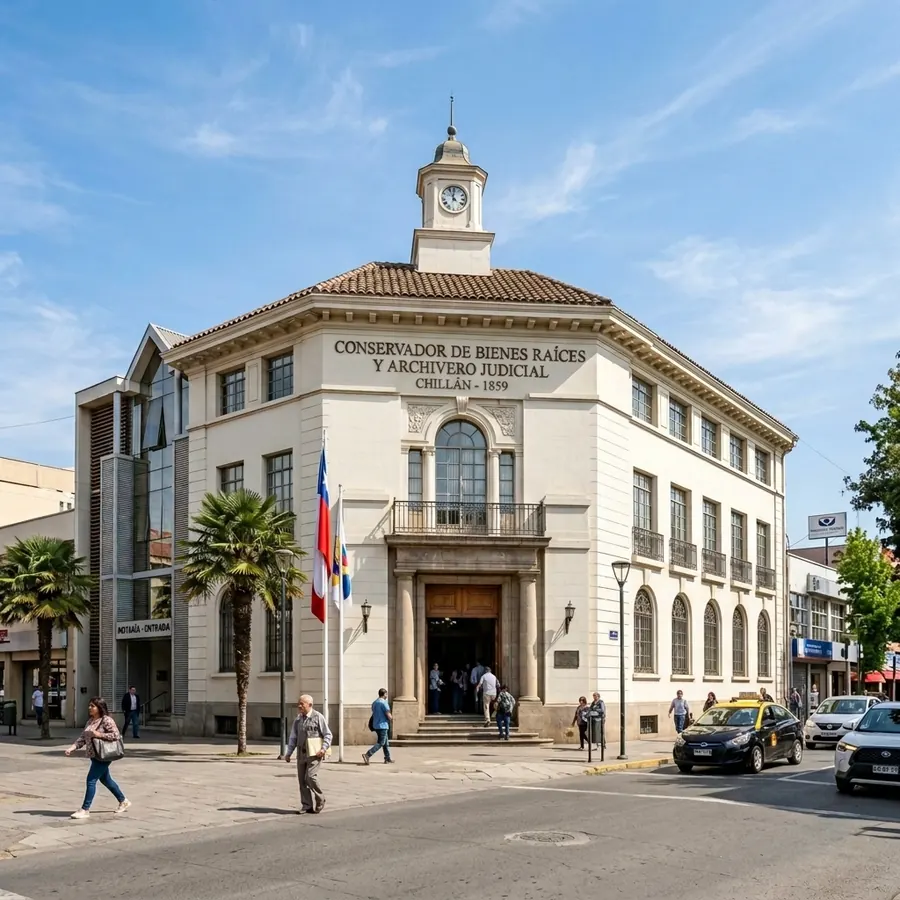
- What characterises Ñuble
- The institutional map of the region
- What we do, and with what team
- What the first meeting is like, and what to bring
- What documents are requested depending on the type of case
- How and when we charge
- When the case involves several family members or neighbours
- Where having your own surveying and architecture team shows
- Frequently asked questions
- ↳ Do you serve areas outside Chillán?
- ↳ I want to leave a plot to each of my children. Can that be done?
- ↳ I am going to buy a parcel in Pinto. What should I check?
- ↳ The farmhouse is in my grandfather's name. Where do I start?
- ↳ Does the first review cost anything?
- ↳ We are several neighbours with the same problem. Is it worth joining together?
- ↳ How long does it take?
- How we get started
Quick answer: we serve the whole Región de Ñuble, with our own team of lawyers, surveyors and architects. For court purposes, the whole region falls under the Corte de Apelaciones de Chillán (the Chillán Court of Appeal), which also has jurisdiction over the comuna of Tucapel, in the Provincia del Biobío. Each comuna has its own Conservador de Bienes Raíces and its own Municipal Building Department, with criteria that are not identical. The first review of your case is free.
Ñuble has its own profile of problems, different from that of a large regional capital, and this page is written around that.
What characterises Ñuble
It is a mostly rural and agricultural region, with property heavily fragmented through successive inheritances and with strong buying pressure for parcels in the foothill area. That combination always produces the same three problems.
The costliest mistake made here. Buying a parcel without checking the access or the water rights. The dirt road you drove in on to see it can be a track running through someone else's land, and the stream running through it does not give you any right to use the water. Both things get checked before you sign, not after.
The institutional map of the region
- The Conservador de Bienes Raíces for the comuna where the property is located. You cannot choose: filing at the wrong one is an express ground for rejection, and how to respond to an objection is covered in this guide.
- The Municipal Building Department of each comuna, for permits, approvals and regularisations.
- The Servicio Agrícola y Ganadero, which certifies subdivisions of rural land and is where most rejections come from.
- The Dirección General de Aguas, for water use rights and wells.
- The Ministry of National Assets, for regularisations under decree law 2.695.
- The civil courts (juzgados de letras) of the region, and above them the Corte de Apelaciones de Chillán.
What we do, and with what team
In Ñuble most cases require going out to the site: measuring, comparing fences against old titles, surveying what has been built. That work is done by our own surveying and architecture team, together with the lawyer handling the case. We do not coordinate outside third parties, and that shows in the timelines.
- Title study before buying or before any procedure.
- Regularisation of title for properties occupied for years without registration.
- Estates: posesión efectiva, registrations and partitions, which make up the main volume of work in this region.
- Subdivision of rural land, including the ley Sabag.
- Contribuciones (the Chilean property tax).
- Civil litigation.
What the first meeting is like, and what to bring
The first meeting is for diagnosis, not for committing to anything. If you send us the property's rol or address in advance, we check the registration and the appraisal value before we talk, so the meeting starts with a diagnosis instead of a questionnaire.
What helps most to bring depends on the case: the deed or the registration if it exists, any earlier plan of the parent property, and the water rights documentation if the property has any registered. If there is a letter, a notice or a rejection notice, send it as it is: that is usually where the date that determines how much time is left can be found.
When the case is a family one, it also helps to have clear who the heirs are and whether there is already a verbal agreement about who occupies each plot of the farm. It does not need to be formalised, but knowing it from the start saves a whole round trip.
What documents are requested depending on the type of case
The five problems in the table above start with different files. In general terms:
- Farms unregularised for generations. The current registration, even if it is in the name of someone who has already died, and the death and family relationship records for whoever claims to be an heir.
- Subdivision of agricultural land. The registration of the parent property, the assessed value certificate and, if the route is the family one, the documents proving the relationship with whoever will receive the lot.
- Buying rural lifestyle parcels. The promise agreement or the deed if it has already been signed, and anything describing how the sale was structured: whether it is an individually identified lot or a share in a larger property.
- Water rights and wells. The registration of the property and any documentation on the well or the historical use of the water, even if it is not registered.
- Constructions without final approval. The title registration and the original plans if they exist. If there are no plans, the first step is a site survey.
Does this match your situation?
Ask about my case on WhatsAppHow and when we charge
The first review is free, and it indicates whether the case is workable and through which route. From there, some procedures are quoted as a fixed process and others in stages, because the real scope is only known after reviewing the titles or going out to the site, which is especially true for large rural properties.
When the work includes surveying or architecture, which in Ñuble is most cases, that part is quoted together with the legal work, not as a separate service. And when there are several properties from the same farm or the same area, the cost per property goes down, because the site survey and the title study of the original property are shared across all the cases.
When the case involves several family members or neighbours
In a region where rural property was split up by word of mouth across generations, this is almost the normal case, not the exception. When several siblings occupy plots of the same farm with no individual title, it is worth starting with a joint meeting so everyone sees the same diagnosis before deciding how to proceed: regularise together, formally divide the land, or resolve it through partition if there is no agreement.
The same happens with rural lifestyle parcel projects, where several buyers share rights over the same parent property. One site visit and one title review cover all the interested parties, and the cost per property drops significantly. This shows most in regularisations of farms.
In these cases it helps a great deal to have a single point of contact who gathers everyone's information before the first meeting: who occupies which plot, whether there is any earlier plan even if informal, and whether there is already a known disagreement. With that, the conversation starts with the full picture of the property, rather than each family's partial version.
Where having your own surveying and architecture team shows
In Ñuble almost everything involves going out to the site: measuring a farm, comparing a fence against a title from decades ago, surveying a farmhouse that has been extended several times. When the surveyor and the architect are on the same team that handles the legal case, the plan is drawn up with an eye on what the Conservador, the Municipal Building Department or the Servicio Agrícola y Ganadero will later ask for, not just on getting the measurements right.
It also shows in the timelines. If adjusting a plan depends on coordinating with an outside third party, every correction adds weeks. Here it gets discussed the same day, because the lawyer and whoever did the survey work together, and that closeness is what stops a file falling over on a detail that could have been fixed before it was filed.
Frequently asked questions
Do you serve areas outside Chillán?
Yes, across the whole region. A good part of the work is rural, and that is where the old titles and boundaries that do not match are found.
I want to leave a plot to each of my children. Can that be done?
It is the most common query in the region, and the answer depends on whether the land and the family qualify for the ley Sabag, which allows subdividing under the general cap in favour of certain relatives, provided strict requirements are met. The requirements, and the reasons applications get rejected, are covered in the guide to the ley Sabag and in why it gets rejected.
I am going to buy a parcel in Pinto. What should I check?
How the sale is structured, whether it is an individually identified property or a share; the access; the water rights; and whether the subdivision that created the parcel was authorised. All four points are checked in a title study, and it costs a fraction of what it costs to discover them later.
The farmhouse is in my grandfather's name. Where do I start?
With the posesión efectiva of the relevant succession, and the registration in the names of the heirs. If there are two generations that were never processed, they have to be done in order, which is why it is worth starting before it becomes urgent to sell.
Does the first review cost anything?
No. We review the documentation and tell you whether the case is workable and through which route. If it is not, we tell you that too.
We are several neighbours with the same problem. Is it worth joining together?
Very much so. One site visit and one coordinated process cover several cases, and the cost per property drops significantly. This shows most in regularisations.
How long does it take?
A posesión efectiva takes months; a regularisation before the Ministry of National Assets takes between a year and a half and two years. These are State timeframes and do not depend on which firm you hire. What does depend on us is making sure the file goes in complete and does not fall over on avoidable objections.
How we get started
Send us the property's rol and a line about what you need resolved. With the rol we check the registration and the appraisal value before we talk, so the first meeting starts with a diagnosis instead of a questionnaire.
If you have a letter, a notice or a rejection notice, send it as it is. That is usually where the date that determines how much time is left can be found.
Tell us your situation and we will tell you what applies.
Talk to a lawyer on WhatsApp