Who is liable for flood damages? State, neighbors, water and electric companies
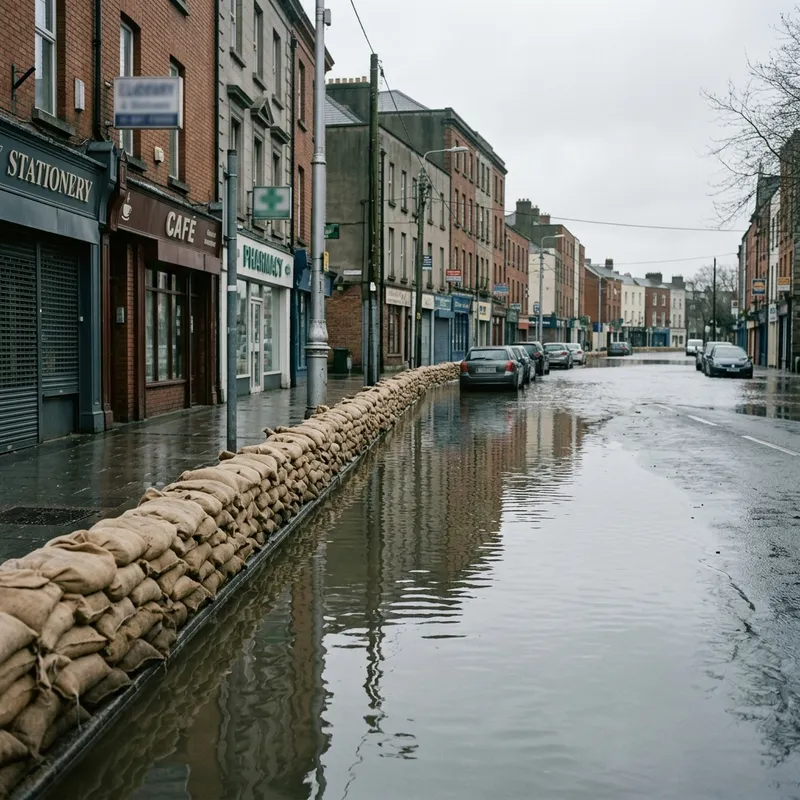
- 1. State and municipal liability
- 2. Water utilities and sewage overflows
- 3. Neighbors who alter the natural flow
- 4. Electric companies and prolonged outages
- Force majeure: when no one is liable
- Where did the damage come from? (Action diagram)
- How to prove liability
- Summary: avenues for claims and lawsuits
- Frequently asked questions (FAQ)
- ↳ Can I sue the municipality if my house flooded?
- ↳ What happens if the water came from the neighbor's land?
- ↳ Must the electric company pay me for the days without power?
- ↳ How much time do I have to sue?
Direct answer: the possibility of suing and obtaining compensation strictly depends on the cause of the damage. If the loss was due to unmaintained collectors or canals, works that diverted waters, collapsed sanitation networks, or excessive electrical outages, there may be legal liability. Conversely, if it was purely the unusual force of nature without anyone's fault (force majeure), there is generally no one to sue and private insurance and State aid come into play.
Faced with the current climate emergency affecting ten regions of our country, including Ñuble and Biobío, it is imperative to inform with honesty. Promises of automatic compensation are false. However, Chilean legislation and courts of justice have clearly outlined four scenarios where there are indeed liable parties who must repair the damages suffered by affected families.
1. State and municipal liability
Law 19.525 expressly obliges the State to ensure the proper functioning and development of rainwater evacuation and drainage systems. When authorities fail to maintain urban watercourses or canals, they commit a "lack of service". On this basis, the courts have ordered the Treasury to compensate affected neighbors. A fundamental precedent originated in the Biobío region itself, where justice condemned the Treasury after the overflowing of the Papen canal in Chiguayante, determining that the flooding was due to the lack of maintenance of the works and not just the intensity of the rains.
Likewise, liability can be shared. The Supreme Court has ratified convictions against both the Treasury and municipalities (for example, in the case of the Las Minas river in Punta Arenas) when both entities neglect their duty to maintain the watercourses crossing the city.
2. Water utilities and sewage overflows
When the flooding of a home stems not only from rainwater but from the collapse of the sewage network, liability falls on the concessionaire water utility. Water utilities have an unavoidable duty to keep their networks operational. A recent Supreme Court ruling, issued in May of this year, ordered a concessionaire to pay substantial compensation to neighbors in Puente Alto after it was proven that the sewage overflow caused material damage and irrefutable moral harm to the affected families.
3. Neighbors who alter the natural flow
The Water Code and the Civil Code establish what is known as a natural drainage servitude. This means that the owner of a lower property must bear the waters that naturally descend from the higher land. However, no one can direct or divert waters towards the neighboring land through ditches, pavements, or artificial works that aggravate the situation of the lower property. Anyone who alters the natural course and causes flooding in adjacent properties must compensate for the damages under the rules of non-contractual liability, an action that prescribes in a period of four years.
4. Electric companies and prolonged outages
Storms are usually accompanied by falling trees and collapsed power lines. The electrical law stipulates automatic compensations that distributors must deduct from the next bill for interruptions exceeding the regulated limits, equivalent to double the value of the unsupplied energy. Additionally, if the outage causes the loss of appliances, food, or medication, you can and should submit a formal claim for power outage on the SEC (Chilean regulator) website, forcing the company to respond for verifiable losses.
Force majeure: when no one is liable
Professional honesty forces us to be clear: if the damage is exclusively the product of an unforeseeable and irresistible natural event, without any lack of canal maintenance or human negligence, we are dealing with force majeure. In these scenarios, the State is not obliged to compensate. Mitigating the damage will then depend on your private insurance or swiftly applying for Government aid. Review our legal guide for storm victims to know the urgent deadlines, or if you are planning to buy in the future, learn how to know if a land is flood-prone before signing.
Where did the damage come from? (Action diagram)
How to prove liability
The success of any legal action depends on proof. A judge will not rule in your favor just because of the tragedy; they need evidence of negligence. Early documentation of the damage through photographs, testimonies, and reports to the Police (Carabineros) or Fire Department is indispensable (consult our initial emergency guide). Furthermore, previous complaints that neighbors have made to the municipality warning of the danger are key.
To technically substantiate the diversion of waters or the lack of structural maintenance, our law firm has a specialized area that prepares technical reports and topographical surveys, essential to tip the judicial scales. You can check more details on our topography and architecture services page.
Summary: avenues for claims and lawsuits
| Liable party | Avenue for claim or lawsuit | Reference period | Key evidence |
|---|---|---|---|
| State or Municipality | Civil lawsuit for lack of service | Four years | Reports of zero maintenance and prior complaints |
| Water Utility Company | Civil compensation lawsuit | Four years | Record of sewage overflow |
| Neighbors | Lawsuit for non-contractual liability | Four years | Topographical survey of illegal works |
| Electric Company | Claim before the SEC and courts | Immediate (six months recommended max) | Receipts for purchasing damaged appliances |
Frequently asked questions (FAQ)
Can I sue the municipality if my house flooded?
What happens if the water came from the neighbor's land?
Must the electric company pay me for the days without power?
How much time do I have to sue?
We understand the frustration and pain of losing your patrimony due to avoidable negligence. We invite you to learn how our team in civil litigation can technically evaluate the viability of your lawsuit against the State, water utilities, or individuals.